

By the Onyx Therapy Team
For many families, summer conjures up images of sunny days, ice creams, holidays and children happily playing outside until the street lights come on.
For many neurodivergent families……it’s a little different.
Sometimes it looks more like wondering why your child is crying because you cut their toast into triangles instead of rectangles.
Or spending an hour packing for a day out, only to turn around after ten minutes because everyone is overwhelmed.
Or answering “What’s for lunch?” approximately 47 times before 10 am.
If that’s your summer, you’re in good company.
The loss of routine is huge
As adults, we often think, “It’ll be nice to have a break from school.”
But for many neurodivergent children, school isn’t just about learning Maths and English.
It’s predictable.
It’s structured.
Someone tells you where to be, when to eat, when to move and what comes next.
The summer holidays suddenly remove all of that.
Imagine someone taking away your diary, your work calendar, your phone reminders and your sat nav all at once.
You’d probably feel a bit lost too.
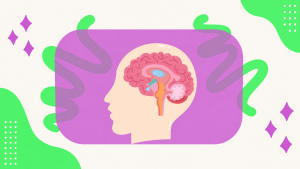
Many neurodivergent children rely on external structure because creating that structure internally can be incredibly difficult. This is linked to executive functioning—the brain’s “management system” responsible for planning, organising, switching attention, getting started and knowing what comes next.
Without school providing that framework, their brain suddenly has to do far more work.
That’s exhausting.
You might notice…
Over the next few weeks, you may see:
- More dysregulation
- More shutdowns
- Increased sensory seeking
- Increased sensory avoidance
- More arguments between siblings
- Difficulty getting started with activities
- More requests for screens
- Eating changing dramatically
- Sleep becoming unpredictable
- Emotional outbursts that seem to come from nowhere
Often these aren’t signs that something has gone wrong.
They’re signs that your child’s nervous system is working incredibly hard.
“But they wanted the holidays!”
Yes.
Both things can be true.
They may have desperately needed a break from school…
…and still struggle once the routine disappears.
Adults do this too.
Think about the excitement before a holiday.
Now think about how disorientating the first couple of days can feel when you suddenly have nowhere you have to be.
Many of us thrive with a little structure—even if we complain about it!
You don’t need to timetable every minute
Please don’t read this and think you need a military-style spreadsheet colour-coded into fifteen-minute blocks.
(Although if you’re reading this and thinking, “Actually… that sounds amazing,” we suspect you might know a neurodivergent person or two!)
Instead, think about creating anchors.
These are predictable points throughout the day.
For example:
Morning
- Wake up
- Breakfast
- Get dressed
- Choose today’s activity
Midday
- Lunch
- Quiet time
- Screens or favourite hobby
Afternoon
- Outdoor activity
- Snack
- Free play
Evening
- Dinner
- Bath or shower
- Wind-down routine
- Bed
Everything in between can be flexible.
Your child doesn’t necessarily need every hour planned.
They just need to know that life still has some predictability.
Lower the expectations
This one is hard.
Social media tells us the summer holidays should be packed with days out, crafts, museums, memory-making and educational experiences.
Reality?
Sometimes surviving Aldi with everyone still wearing shoes is the achievement of the day.
And that’s okay.
Children don’t need six weeks of constant entertainment.
They need to feel safe.
Connected.
Understood.
Think about energy, not behaviour
Instead of asking:
“Why are they behaving like this?”
Try asking:
“How much energy has their brain used today?”
Every decision…
Every unexpected change…
Every loud environment…
Every social interaction…
Every new activity…
Every demand…
…uses energy.
Some children wake up with what feels like 100 batteries.
Others wake up with 20.
Neither is wrong.
They’re simply different.
Summer can be a brilliant time to learn about your child
Without the pressure of school, you might notice things you’ve never seen before.
Perhaps they always wear headphones when shopping.
Perhaps they eat much better later in the day.
Perhaps they regulate best after swinging.
Perhaps they need an hour alone after seeing friends.
These observations are valuable.
Not because we’re trying to “fix” anything.
But because understanding creates compassion.
And compassion changes everything.
Finally…
If today has been hard…
If you’re counting down until bedtime…
If the house is upside down…
If you’ve cancelled another trip because it all became too much…
You’re not failing.
You’re parenting a child whose nervous system experiences the world differently.
The goal isn’t to create the “perfect” summer.
It’s to create one where everyone finishes feeling safe, connected and accepted.
Some days that might look like a family adventure.
Other days it might look like everyone eating picnic food on the living room floor while watching a favourite film for the seventeenth time.
Both count.
Both are enough.
From all of us at Onyx Therapy, we hope your summer is filled with moments of joy, plenty of compassion (especially for yourself), and the freedom to let go of what you think the holidays should look like.
Because the best summer isn’t always the busiest one.
Sometimes it’s simply the one where everyone feels able to be themselves.





One Response
hello